The Scale of Expansion: From Niche Reform to Mainstream Reality
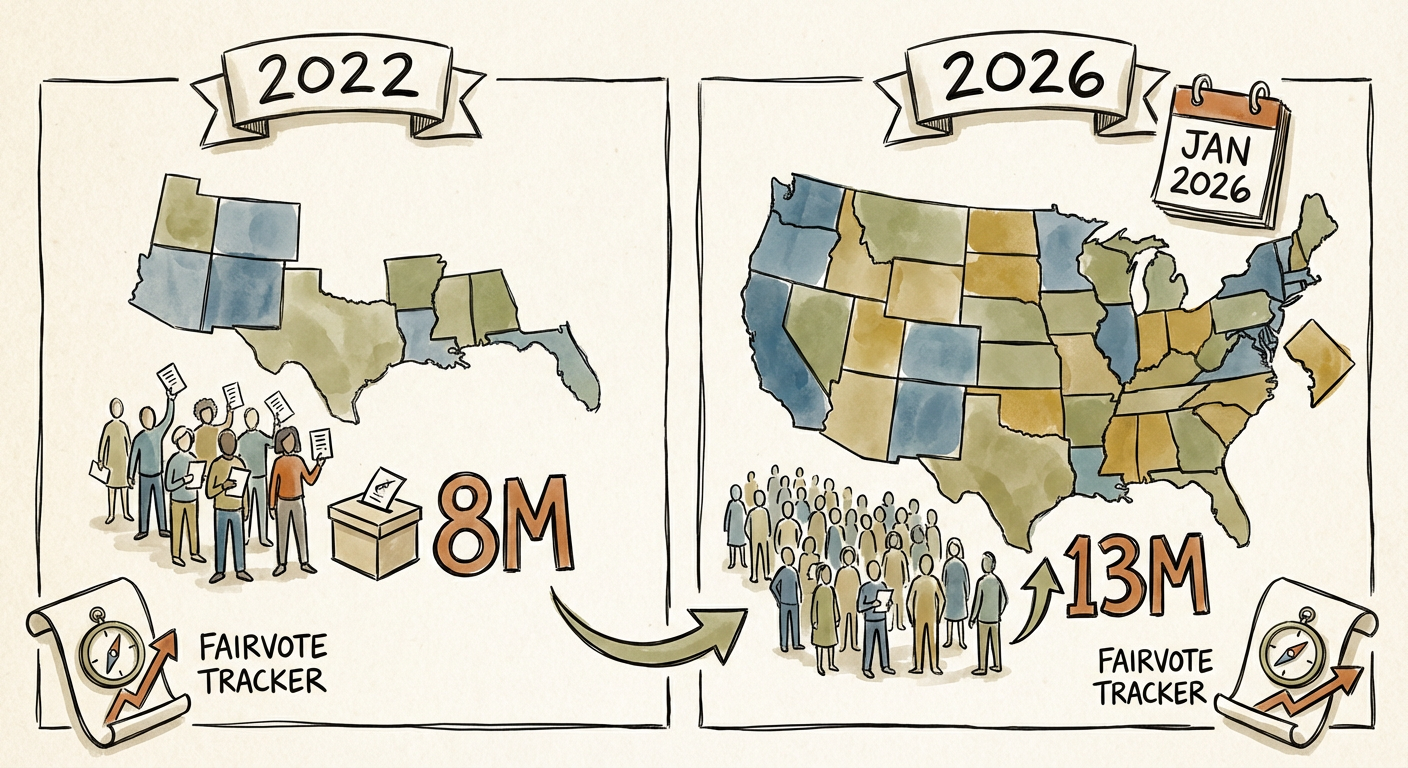
Ranked-choice voting has crossed a threshold worth paying attention to. By January 2026, more than 13 million eligible voters across 17 states and Washington D.C. cast ballots using some form of ranked-choice system. That’s a 62 percent increase in just four years, up from roughly 8 million voters in 2022. This isn’t some marginal experiment confined to a few progressive cities. The geographic and demographic diversity of these jurisdictions means we now have enough data to say something real about how voting methods reshape candidate recruitment and electoral behavior.

Nevada’s November 2024 approval of Ballot Question 3 is worth noting on its own. The state’s voters authorized ranked-choice voting for statewide elections, making it the single largest expansion of RCV adoption by eligible voter count in American history. When a state with 2.3 million residents votes to overhaul its electoral system through direct democracy, something has shifted. This is no longer the province of Vermont municipal councils or pilot programs. It’s becoming embedded in serious electoral politics.
The Candidate Supply Problem That Traditional Systems Create
To understand why voting mechanics matter at the precinct level, you first need to grasp something political scientists have documented but rarely reaches public conversation: the method by which we vote directly determines who decides to run for office. This isn’t philosophical. It’s a mechanical consequence of how candidates calculate their chances.
In a traditional plurality system, where the candidate with the most votes wins, a third-party or independent candidate faces brutal math. Even with genuine support, they risk splitting the vote and electing someone they actively oppose. Voters know this and behave accordingly. Candidates know voters will abandon them out of fear. So people who might otherwise run don’t. They stay home, work on campaigns for major-party candidates they only partially support, or wait for a different political moment that never comes.
Ranked-choice voting eliminates this trap. A voter can rank an independent or third-party candidate first without worrying that their vote becomes wasted if that candidate falls short. The ballot moves to their second choice. Candidates can build campaigns around their actual ideas rather than spending energy convincing voters they’re not a spoiler. The data from jurisdictions that have implemented ranked-choice systems show exactly this effect playing out at the precinct level.
Alaska’s 2024 Cycle: Measurable Shifts in Who Gets on the Ballot
Alaska conducted its 2024 congressional elections under ranked-choice voting for the first time, and the results gave us the kind of granular, precinct-level evidence that lets us move beyond speculation. Candidates from outside the Republican and Democratic parties qualified for the general election ballot at a rate 6.2 percentage points higher than in 2020, when Alaska used traditional plurality voting. That might sound modest until you think about what it actually means: more candidates, with more ideological diversity, made it past the primary stage and onto the November ballot where voters could seriously consider them.
This matters not because non-major-party candidates are automatically better, but because it expands the universe of actual choice. Precincts that leaned toward independent or Libertarian or Green Party candidates saw those options make it to the general election. The supply of candidates shifted to reflect what voters actually wanted to consider, rather than what strategic calculations under plurality rules had winnowed away before November. That’s a direct translation of voting system structure into concrete outcomes in real neighborhoods.
Gender Representation and the Broader Diversification Pattern
Research from the MIT Election Data and Science Lab, released in 2025 and available through their MIT Election Data and Science Lab: Ranked Choice Voting Research, found that jurisdictions using ranked-choice voting showed a 19 percent higher rate of women candidates advancing past primary stages compared to traditional plurality systems. A 19 percent increase in the baseline rate at which women qualify for general election ballots translates into different conversations in different communities, different role models, and different actual priorities reflected in the choices voters face on election day.
The mechanism here overlaps with what we see with non-major-party candidates but works differently. Women candidates, particularly challengers and candidates from underrepresented groups, face additional strategic disadvantages in plurality systems. They’re often considered longer shots by both voters and donors. Ranked-choice voting reduces the penalty for taking a chance on a candidate who doesn’t fit the traditional mold of political viability. Precinct results across multiple jurisdictions show that women candidates win at higher rates in ranked-choice environments, but the earlier effect often gets overlooked: more women run in the first place, because the math looks less hopeless.
Portland’s Structural Shift and Why Local Elections Deserve This Attention
Portland, Oregon, made a significant structural change in November 2024 when voters approved a new system for city council elections. Rather than electing individual council members from single-member districts, the city moved to electing 12 council members from four geographic districts using ranked-choice voting. This isn’t a tweak. It’s a complete reimagining of how local representation works, and Portland voters chose it deliberately.
Local elections are where voting system changes have their most immediate and visible effects. Precinct-level results in Portland’s November 2024 elections will tell us whether multi-member districts combined with ranked-choice voting actually increase the diversity of candidates and viewpoints represented. These aren’t abstract questions. They determine who sits in the room where decisions get made about zoning, public safety, schools, and housing costs. They determine whether a neighborhood resident with ideas about local policy feels like they have a reasonable shot at influencing those decisions directly.
For those interested in the documented effects of ranked-choice voting across multiple jurisdictions, FairVote RCV Election Results Database provides detailed precinct-level results from past elections. The data accumulates. Each election cycle adds another layer of evidence about how voting systems shape not just who wins, but who decides to try.
What This Means as the System Matures
As ranked-choice voting reaches scale, the conversation shifts from whether it’s theoretically sound to what actually happens when millions of voters use it and thousands of candidates make decisions about running based on its existence. The precinct-level evidence from Alaska, the gender representation data from academic researchers, and the structural experiments happening in places like Portland all point toward the same conclusion: voting methods aren’t neutral. They’re mechanisms that determine the set of options available to voters before voting ever happens.
That means the 13 million voters now participating in ranked-choice elections aren’t just choosing candidates. They’re participating in a system that has already changed which candidates felt confident enough to run, which candidates had the financial support to compete, and which perspectives made it past initial screening to be taken seriously. What questions do you see emerging in your own community as elections change? What have you noticed about who is running and why?