From Town Square to Timeline: Democracy’s Digital Evolution
The parallels between ancient Athens and modern digital democracy go deeper than surface comparisons. Just as the agora was both marketplace and political forum, today’s social media platforms are hybrid spaces where commerce, conversation, and civic engagement collide in messy, complicated ways. The real difference isn’t in our human need to gather and argue, but in how fast and how far these conversations now travel.
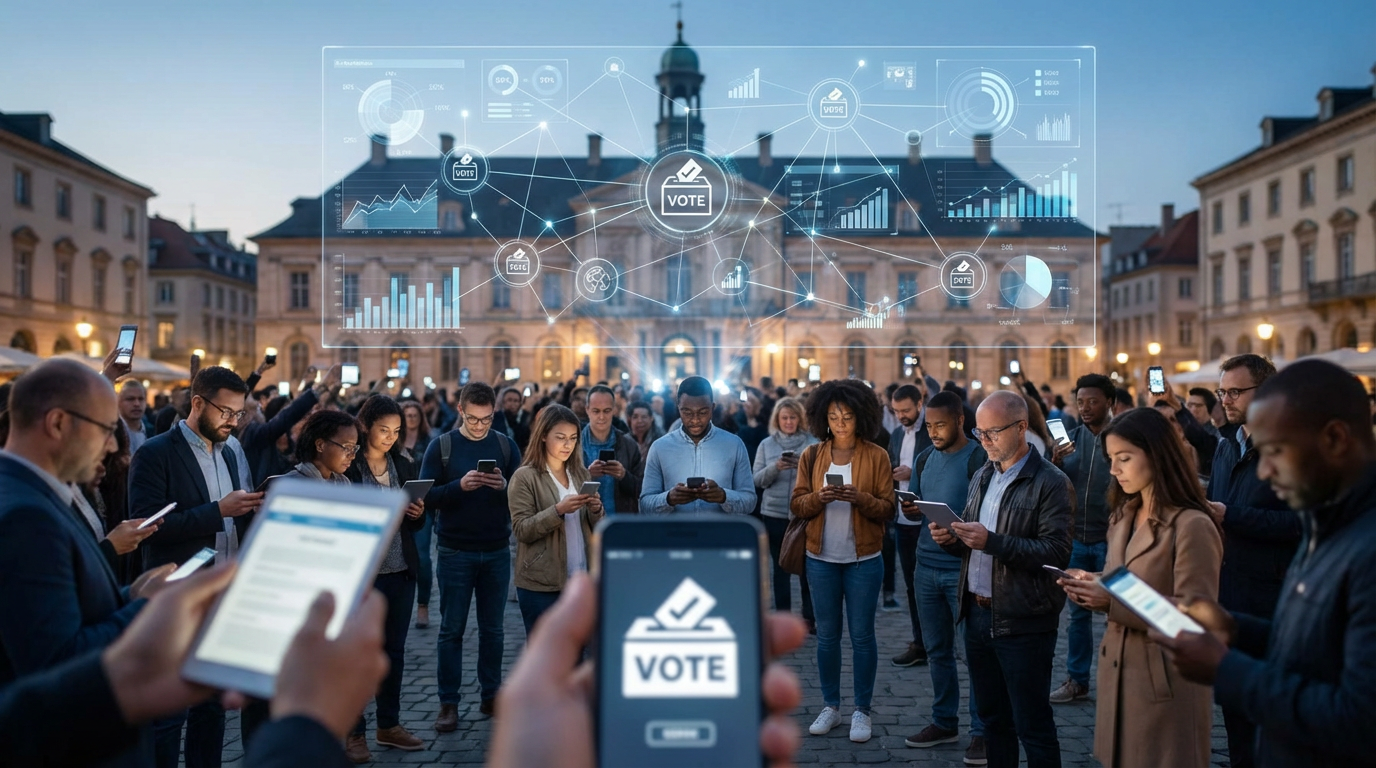
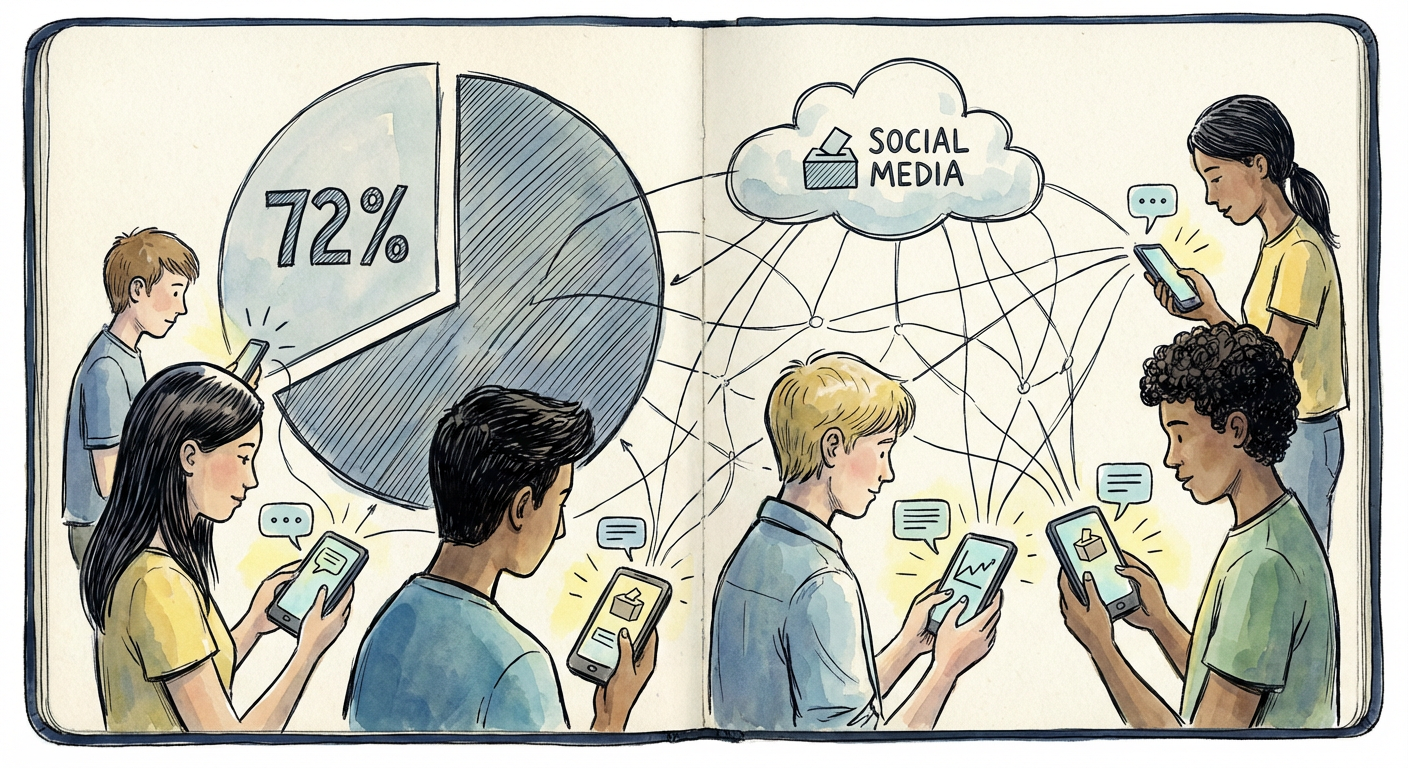
Think about how political information moves now. Nearly three-quarters of voters under 35 get their political news primarily from social media. That would have seemed impossible even twenty years ago. This isn’t just a generational preference, it’s a complete rewiring of how democratic societies process and share political knowledge. The gatekeeping function that editors and broadcasters used to handle has been democratized, but so has the job of fact-checking and making sense of complex policy debates.
The closest historical comparison might be the printing press, which also disrupted established information hierarchies and created new ways to organize politically. But even Gutenberg’s revolution took centuries to unfold, while digital democracy has emerged in just a few decades. This time compression creates amazing opportunities for civic participation, but also creates new vulnerabilities that our democratic institutions are scrambling to understand.
The New Mechanics of Political Mobilization
Political organizing has probably changed more than any other part of democratic participation. Messaging platforms like WhatsApp and Telegram are now the go-to tools for local political mobilization across the globe, from neighborhood council races to national movements. These tools let organizers coordinate activities, share resources, and keep ongoing conversations going with supporters in ways that used to require serious institutional backing.
The move toward open-source canvassing and voter contact tools has completely changed campaign dynamics. What once required big budgets and technical expertise can now be done by small teams with laptops and determination. This has lowered the barrier for political newcomers while raising expectations for sophisticated data-driven outreach among all candidates.
But this technological empowerment comes with problems that earlier democratic reformers couldn’t have imagined. The same platforms that enable grassroots organizing also help spread misinformation and manipulate political discourse. The Brennan Center democracy research has shown how algorithmic systems consistently amplify content designed to provoke outrage, regardless of whether it’s factually accurate or actually useful for democratic debate.
Foreign Influence and the Vulnerability of Open Systems
The openness that makes digital democracy possible also creates new vulnerabilities to foreign interference. Unlike propaganda efforts of previous eras, which required significant resources and infrastructure to distribute widely, today’s influence operations can achieve global reach with relatively modest investments in content creation and platform manipulation.
Evidence of coordinated foreign influence campaigns has popped up on every major social media platform ahead of significant elections worldwide. These operations exploit the same features that make digital organizing effective for legitimate political movements: viral sharing mechanisms, algorithmic amplification, and the ability to target specific demographic groups. The challenge is developing countermeasures that preserve the benefits of open digital discourse while reducing these risks.
Historical comparisons don’t help much when dealing with this challenge. Previous instances of foreign propaganda required clear distribution channels that could be identified and regulated. Digital influence operations, by contrast, often work through networks of seemingly authentic accounts and organic-looking content, making detection and response much more complex. The speed at which false information can spread across digital networks makes these difficulties worse, often outpacing traditional fact-checking and verification processes.
Economic Transformation of Political Participation
Digital fundraising has revolutionized not just how campaigns raise money, but who can participate meaningfully in the political process. The traditional model of political financing, which relied heavily on major donors and institutional supporters, has given way to a system increasingly dependent on small-dollar contributions from large numbers of individual supporters. This shift has real implications for how candidates build coalitions and maintain accountability to their supporters.
The barriers to political fundraising have dropped dramatically, letting candidates with limited traditional resources compete effectively if they can mobilize online communities. However, this democratization of political finance comes with its own challenges. Campaigns become increasingly dependent on maintaining constant engagement with donor bases, often leading to more polarized messaging designed to motivate repeated contributions rather than build broad coalitions.
The micro-donation model also creates new forms of political inequality, as candidates who excel at digital engagement gain significant advantages over those who rely on traditional organizing methods. This dynamic particularly affects older candidates and those representing communities with limited digital access, potentially skewing representation in ways that undermine democratic equity.
Navigating the Algorithmic Influence on Democratic Discourse
Perhaps the most subtle yet pervasive challenge facing digital democracy involves how algorithmic curation shapes political discourse. Unlike the editorial decisions made by human gatekeepers in traditional media, algorithmic systems operate according to engagement metrics that often conflict with the goals of informed democratic debate. Content designed to provoke strong emotional reactions consistently gets wider distribution than thoughtful policy discussions or measured analysis.
This dynamic creates incentives for political actors to craft messages optimized for viral spread rather than accuracy or constructive dialogue. The result is a public discourse increasingly dominated by extreme positions and inflammatory rhetoric, while moderate voices and complex policy proposals struggle to gain attention. The historical parallel might be the yellow journalism of the early twentieth century, but even that comparison understates the scale and automation of current distortions.
The challenge goes beyond individual platforms to include the broader information ecosystem. As Democracy Now and other independent media outlets have documented, the concentration of digital advertising revenue among a few major platforms has weakened traditional journalism while strengthening the influence of algorithmic curation over public discourse.
Understanding these dynamics requires ongoing research and experimentation with alternative models for digital civic engagement. The future of democratic participation will likely depend on our ability to harness the benefits of digital organizing while developing new institutions and practices that promote informed, constructive political dialogue. What aspects of digital democracy do you see as most promising or concerning in your own political engagement?